Buying Guides
Cold Plunge with Built-In Chiller: What to Know Before Buying?
A cold plunge with a built-in chiller is designed to make cold water therapy feel effortless — quiet, serviceable and integrated into the architecture.
Author
The Kalachakra Atelier
Editorial
Published
August 2026
Reading
6 min read
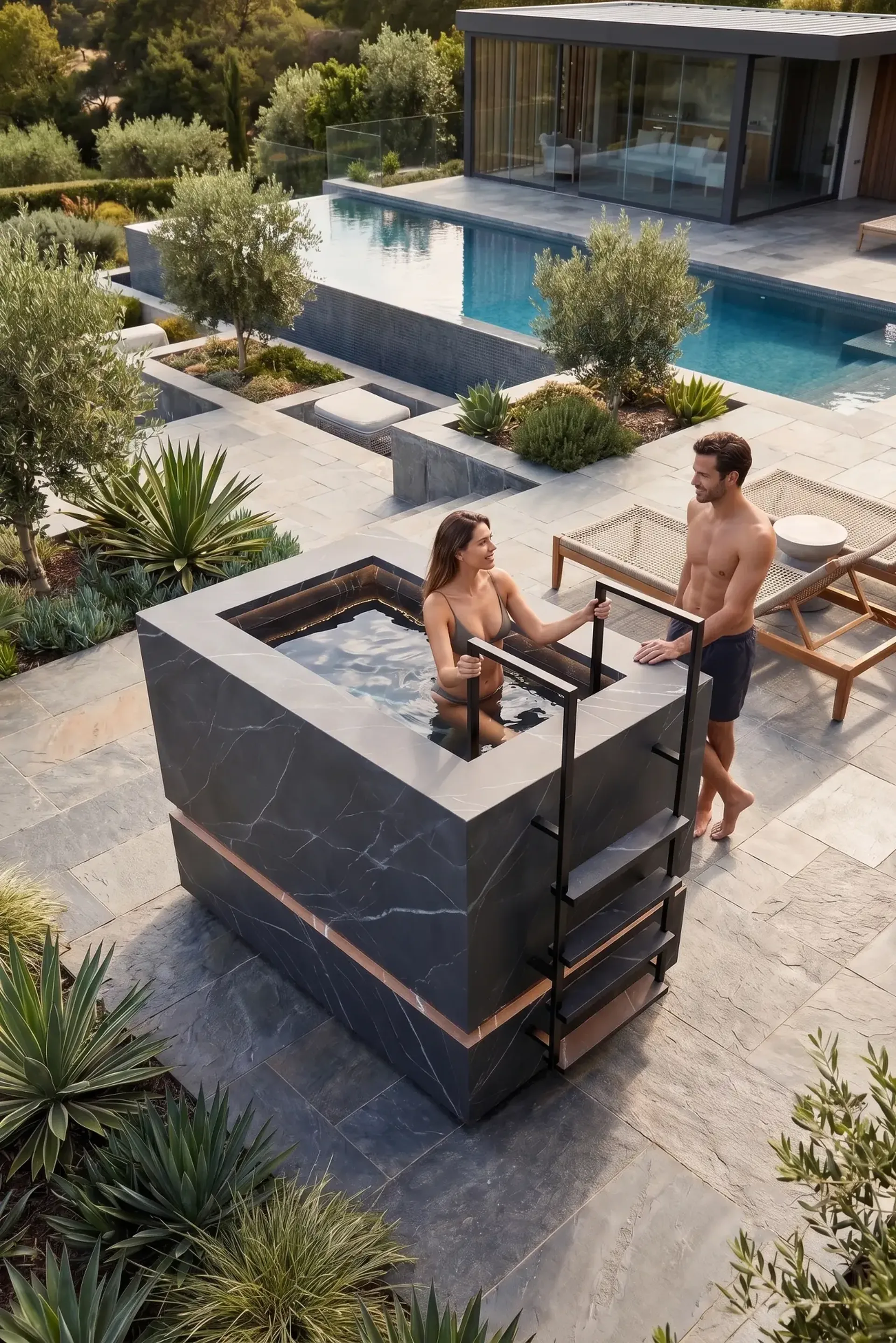
A cold plunge with a built-in chiller is designed to make cold water therapy feel effortless. Instead of adding ice or hiding technical equipment somewhere else, the system controls the water temperature mechanically and keeps the bath ready for regular use.
For a premium home, the important question is not only whether the plunge can get cold. It is whether the technical system can perform quietly, look considered, remain serviceable and integrate into the room without visual clutter.
What does “built-in chiller” really mean?
In simple terms, a built-in chiller is part of the plunge's own technical system. It cools the water to the selected temperature and helps maintain it over time. In a fully integrated model, the equipment is housed inside the body of the bath. In other systems, the equipment may live in a separate technical cabinet.
LOKI and THOR are examples of integrated systems: the technical pack is inside the cabin, so there is no external chiller to place beside the bath. BJORN and FRODE use a discreet separate technical cabinet, which can be positioned with the design of the room in mind.
Why built-in matters in architecture
External equipment can be practical, but it often creates a design problem. Hoses, cabinets, pumps and service equipment can interrupt a clean terrace or wellness room. In a premium project, the bath should feel like it belongs to the architecture, not like equipment added after the fact.
A built-in or concealed technical system helps solve this. It allows the plunge to read as one finished object. The lines stay calm. The materials carry the visual weight. The technical work happens quietly in the background.
Key specifications to check
Before buying, review the temperature range. For LOKI, BJORN, FRODE and THOR, the operating water temperature is +5 °C to +40 °C, allowing the same bath to function as a cold or warm water ritual. This range is useful for households where different users prefer different practices.
Noise level is also important. A plunge used near a bedroom, wellness room, terrace or private spa should not dominate the space. The Nordic Vitality cold/hot plunge models are specified below 45 dB at 1 m, which keeps the machinery visually and acoustically quiet.
Filtration and sanitation matter as much as cooling. A cold plunge should not feel like a bucket of cold water. It should feel like a managed water system. Look for filtration, skimming, UV sanitation and clear service access.
Service access and maintenance
A built-in system must still be serviceable. This is where luxury design and practical engineering need to meet. Good design does not hide the system so completely that maintenance becomes difficult. It hides it intelligently, with access points planned into the object.
For example, LOKI includes service access below the cabin. THOR has a service hatch below the cabin. FRODE and BJORN use separate technical cabinets, which can make access easier when the layout allows it.
Energy use and insulation
Cooling water is energy-intensive if the bath is poorly insulated. A premium plunge should use high-density insulation and a cover to help maintain temperature. The better the envelope, the less the system has to work to keep the water ready.
This matters especially outdoors. Sun, wind and ambient temperature can all affect performance. For colder climates, optional winter packages can extend the operating envelope for selected models.
What should the customer prepare?
Even when the technical system is integrated, the site still matters. The customer should plan for a suitable electrical outlet, tap-water connection, drainage and enough access for delivery and service. A qualified local electrician and installer should confirm the final requirements before installation.
Installation is not included as a standard service. The bath is delivered as a premium product, but local site work remains the responsibility of the customer unless otherwise agreed in writing. See the Terms & Conditions for full details.
FAQ
Is a built-in chiller better than an external chiller?
For premium residential spaces, a built-in or concealed system is often better visually. It reduces clutter and helps the plunge feel like part of the architecture.
Does a built-in chiller mean no maintenance?
No. It still requires filtration care, water management and occasional servicing. The benefit is convenience and integration, not zero maintenance.
Can the same bath be hot and cold?
LOKI, BJORN, FRODE and THOR operate from +5 °C to +40 °C, giving both cold and warm water flexibility.
Is the system quiet enough for a home?
The cold/hot plunge models are specified below 45 dB at 1 m, making them suitable for residential wellness settings when installed correctly.
Speak with a product specialist to decide whether an integrated technical pack or separate technical cabinet is better for your project.
Request a consultationRelated essays
All essays
Buying Guides · 7 min read
How Much Does a Luxury Cold Plunge Cost?
What drives the price of a premium cold plunge — the technical system, materials, insulation, water quality and the cost of ownership over time.
Buying Guides · 9 min read
How to Choose a Luxury Cold Plunge
Chilling capacity, filtration, insulation and materials — the specification criteria that actually matter.
Cold Therapy · 12 min read
Cold Immersion and the Architecture of Recovery
How deliberate cold exposure, practiced daily in a designed environment, reshapes sleep, resilience and metabolic health.
The Collection
Explore the Kalachakra Collection
Discover handcrafted cold plunges and wellness systems designed for recovery, longevity and daily ritual.