Buying Guides
Cold Plunge Electrical Requirements: US vs EU
Understand the basic electrical planning required for a premium cold plunge in the US, EU, UK and other markets.
Author
Kalachakra Editorial Team
Editorial
Published
September 2026
Reading
4 min read
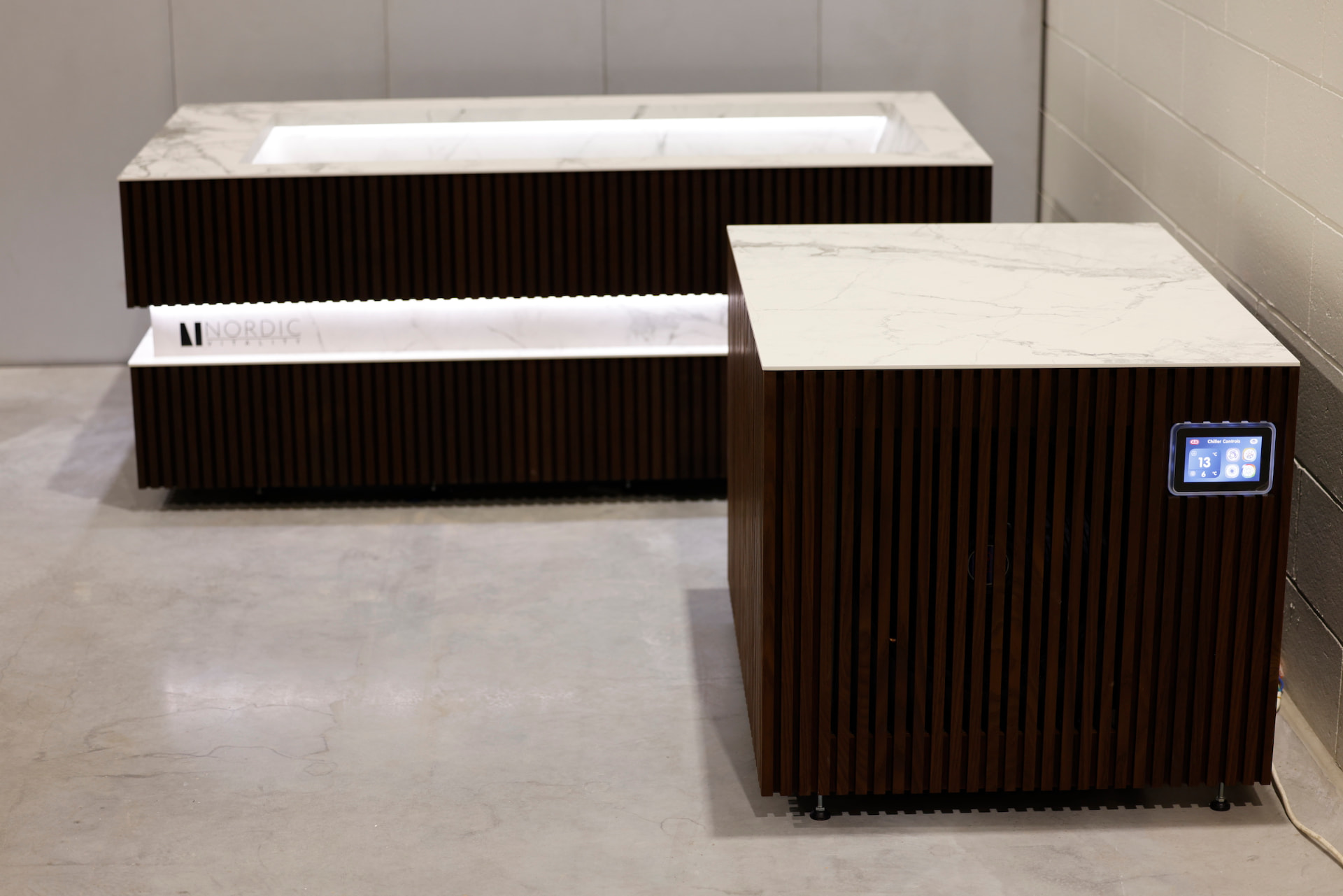
Electrical planning should happen before a cold plunge is delivered. It is one of the simplest parts of the project to prepare early, and one of the most frustrating to correct late.
Because a cold plunge combines water, temperature control, filtration and electrical equipment, the installation must be reviewed by a qualified local electrician. Regional standards vary, but the principle is the same everywhere: use a properly protected, dedicated electrical connection that matches the product specification.
The basic principle: dedicated and protected
A premium cold plunge should not be treated like a small portable appliance. It should have a dedicated power point or circuit as specified for the model and region. The circuit should be protected against fault conditions using the appropriate local safety device.
In the EU, UK and Australia, this generally means an RCD-protected outlet or circuit. In the United States, this generally means GFCI protection. The terminology differs by region, but the purpose is similar: to reduce electrical risk around water.
Longevity Plunge model requirements
For LOKI, BJORN, FRODE and THOR, the current product specifications list:
- EU/AUS/UK: AC 220-240 V, 13 A RCD outlet
- US: AC 110-127 V, 15 A GFCI outlet
STIG is different because it is a freestanding hot tub format. Its current product specification lists:
- EU/AUS/UK: AC 220-240 V, 32 A RCD outlet
- US: AC 220-240 V, 32 A GFCI outlet
These requirements should always be confirmed against the final order documents, because regional specifications, local codes and selected options may affect the installation.
Why extension cords are not the answer
A cold plunge should not be connected through an improvised extension cord or temporary outdoor solution. Even if the product appears to power on, this can create safety, performance and warranty issues.
A qualified electrician should confirm the outlet location, protection type, rating, grounding and suitability for the environment. Outdoor installations may require weather-rated components and additional local compliance.
US vs EU: what changes?
The main difference is voltage and protection terminology. Many US residential products use 110-127 V circuits with GFCI protection. Many EU/UK/AUS installations use 220-240 V circuits with RCD protection. STIG requires a higher-rated 220-240 V, 32 A supply.
For international buyers, this means one thing: do not assume the electrical setup from one country applies to another. Confirm the exact destination market and model before installation begins.
Where should the outlet be placed?
The outlet or connection point should be close enough for clean installation, but not positioned where it interferes with service access, water flow, drainage or movement around the product. It should be part of the plan, not an afterthought.
For architectural projects, the electrical point should be coordinated with the product dimensions, service hatch, cabinetry, decking and drainage route. A beautiful installation can be compromised by a cable path that was not planned early.
Checklist before ordering
Before placing an order, confirm:
- destination country and local electrical code
- selected model and accessories
- indoor or outdoor placement
- outlet/circuit rating
- RCD or GFCI protection
- grounding
- distance to the product
- service access
- whether any trenching, conduits or cabinetry are needed
FAQ
Can I plug a cold plunge into a normal outlet?
Only if the outlet matches the product specification and local safety requirements. A qualified electrician should confirm this.
What is the difference between RCD and GFCI?
They are different regional terms and devices used to reduce electrical risk around fault currents. The required solution depends on local code.
Does STIG need more power?
Yes. STIG is specified with a 32 A supply, unlike the 13 A/15 A requirements listed for the cold/hot plunge models.
Who is responsible for electrical installation?
The customer is responsible for arranging qualified local professionals unless otherwise agreed in writing.
Before delivery, request a specification sheet and share it with your electrician, architect or project manager.
Request a consultationRelated essays
All essays
Buying Guides · 6 min read
Cold Plunge with Built-In Chiller: What to Know Before Buying?
Temperature range, noise, filtration, service access and architectural integration — what to review before choosing an integrated cold plunge.
Buying Guides · 7 min read
How Much Does a Luxury Cold Plunge Cost?
What drives the price of a premium cold plunge — the technical system, materials, insulation, water quality and the cost of ownership over time.
Buying Guides · 4 min read
Hot and Cold Plunge Tub: One System for Recovery and Relaxation
How a hot and cold plunge system can support both recovery and relaxation in one premium residential wellness object.
The Collection
Explore the Kalachakra Collection
Discover handcrafted cold plunges and wellness systems designed for recovery, longevity and daily ritual.